
Camps

Holiday camps and workshops

Multi-day robotics build projects and workshops during school holidays. Contact the school to confirm current availability.

8+Holiday camp26 Oct–30 Oct 2026at 9:00 AMVAT inc

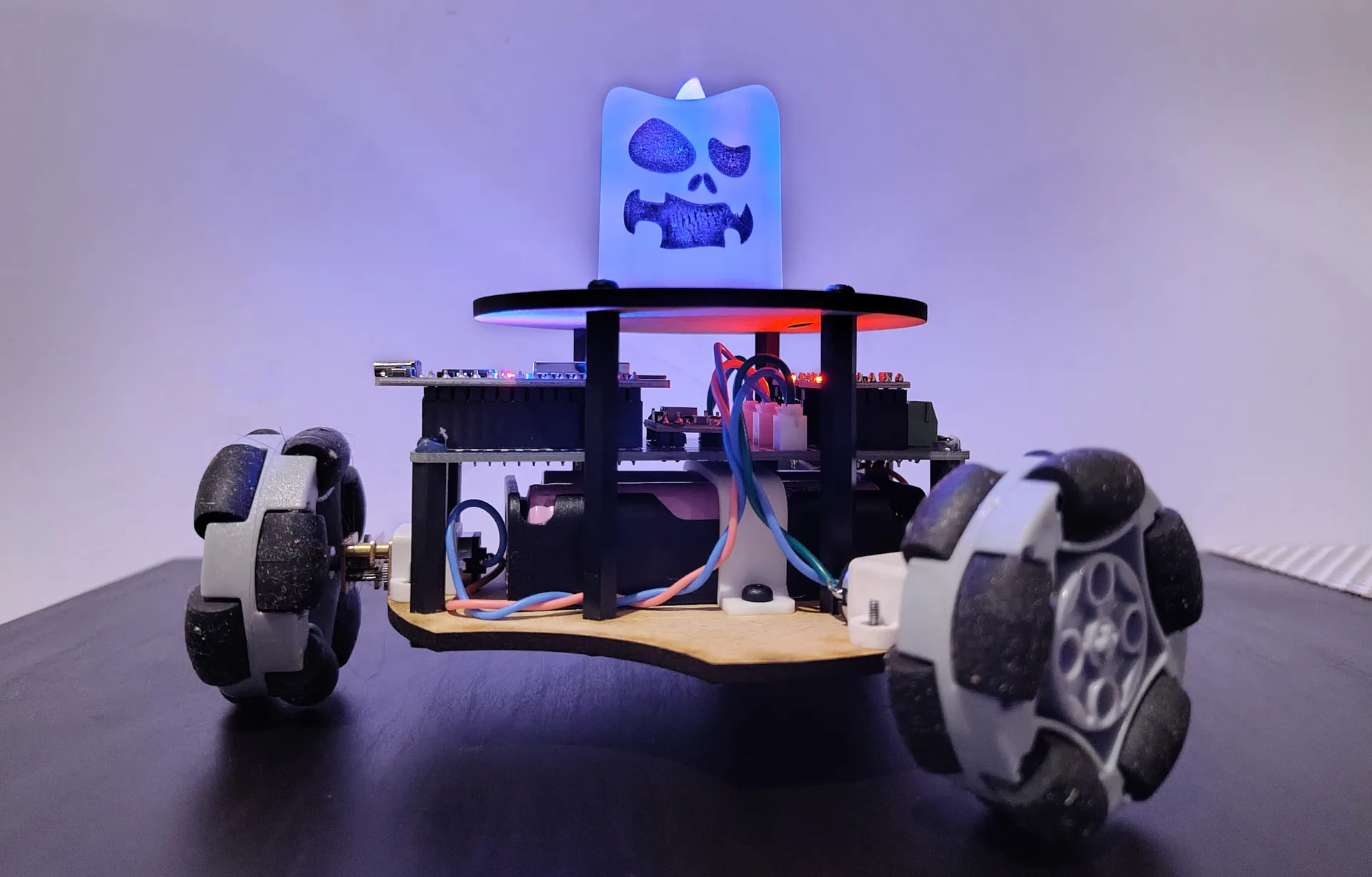
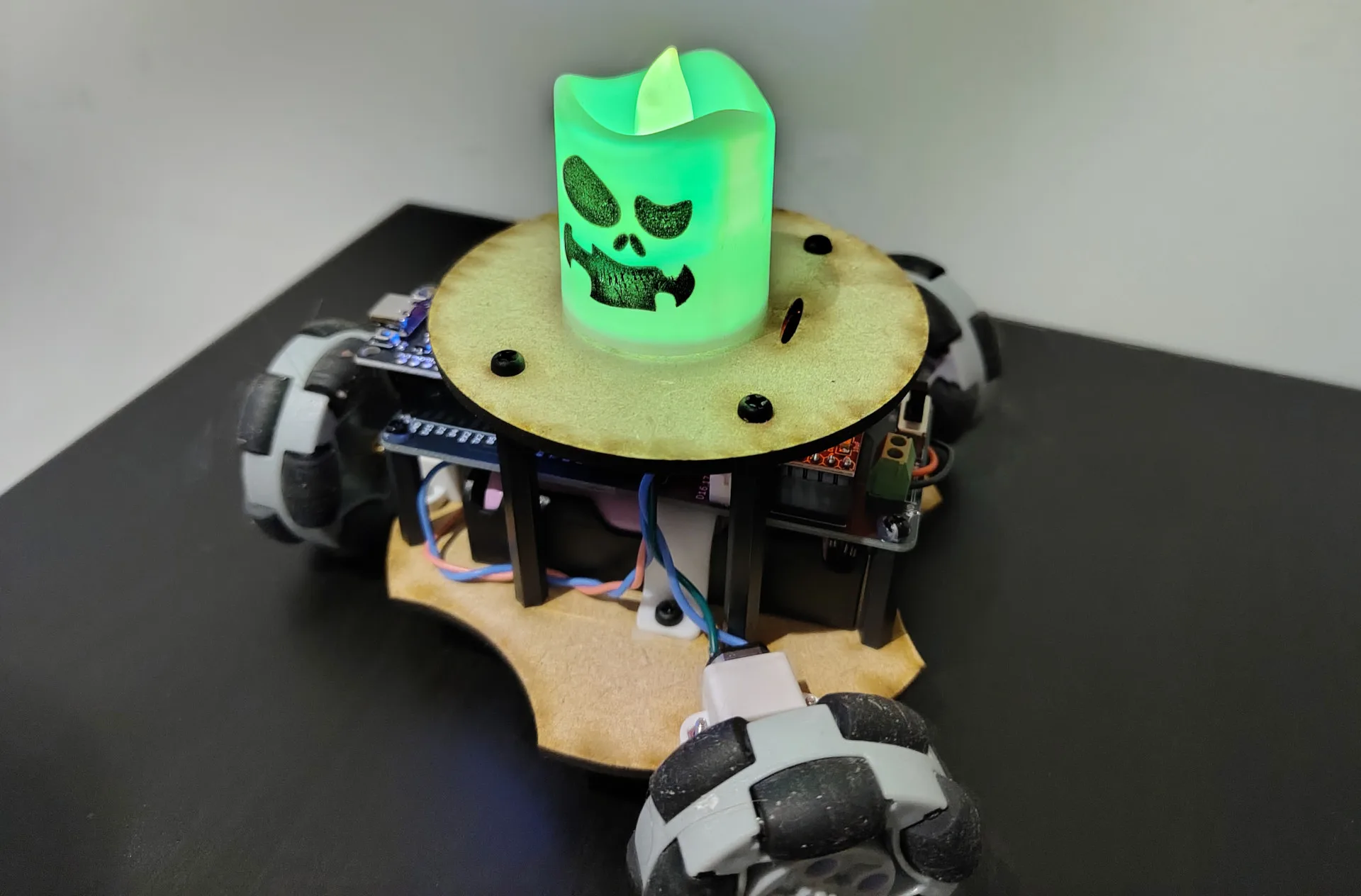
Ghost Rider – Halloween Omni Wheel Robot. The Morning Set

Ghost Rider is a Halloween robotics project for young makers aged 8-11. In this project, children build and program a small robotic car that carries a spooky electric ghost candle. The robot can move forward and backward, turn around, and even slide sideways thanks to its three special omni wheels.Students use Robium Code, our block-based programming environment, to control the robot step by step. They learn how to send movement commands, control motors, and combine simple blocks into a working program. Instead of only watching a robot move, children build the logic themselves and see immediately how their code changes the robot's behaviour.The robot uses three DC motors, motor drivers, an ESP32 controller, and a Bluetooth ring controller. Children explore how wireless control works and how different wheel directions can be combined to create unusual movement. The omni-wheel design makes the project especially exciting: the robot does not move like an ordinary car - it can glide, turn, and change direction in a surprising way.For the Halloween theme, the robot carries a small plastic electric candle with a ghost face, turning the finished project into a moving "ghost light". This gives the project a fun creative side as well as a technical one.During the project, students practise building circuits, connecting motors, testing movement, debugging mistakes, and improving their code. They also learn an important engineering idea: when a robot does not move as expected, we test one part at a time, find the cause, and adjust the program or wiring.By the end of the project, each student will have built a working Bluetooth-controlled Halloween robot and will understand the basic principles behind motor control, wireless commands, and omni-wheel movement.By building their own Halloween-themed Ghost Rider robot, pupils experience how electronics, mechanics, wireless control, and programming combine to create a fun moving robot.
8+October Workshop17 Oct 2026at 10:00 AM–12:00 PMVAT inc

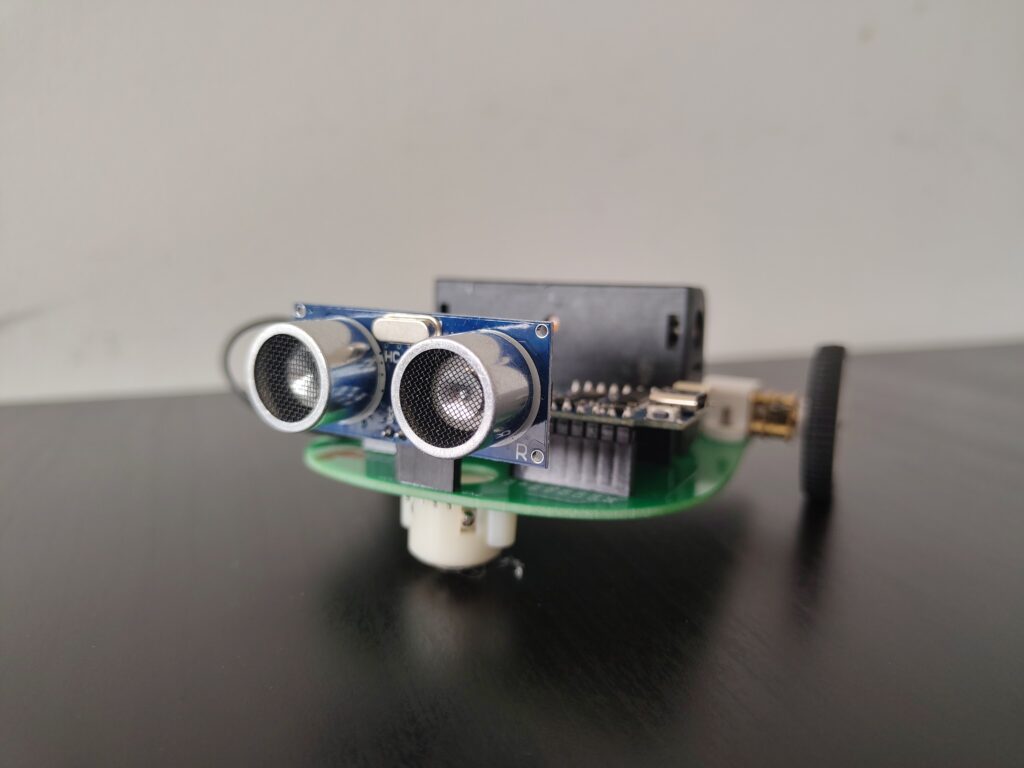
Robium Desktop Car — Block Coding Version

Robium Desktop Car is a fast-paced 2-hour robotics workshop where students build, program and test their own autonomous robot car. The car is based on an ESP8266 microcontroller and uses a DRV8833 dual H-bridge motor driver to control two DC motors. An HC-SR04 ultrasonic sensor allows the robot to measure the distance to objects in front of it and react to obstacles. Students assemble the robot, connect the main electronic components and program its behaviour using RobiumBlock, our visual block-based coding environment. They create a simple autonomous driving algorithm: the car moves forward, checks the distance ahead, stops when an obstacle is detected, reverses, chooses a new direction and continues driving. During the workshop, students also learn the basic idea behind an H-bridge and how changing the direction of current through a motor allows a robot to drive forwards, backwards and turn. The session is designed to be practical and engaging, with plenty of time for testing, experimenting and improving the robot’s behaviour. At the end of the workshop, every student takes home their own fully working Robium Desktop Car.

11+Holiday camp26 Oct–30 Oct 2026at 12:30 PMVAT inc

Ghost Rider – Halloween Omni Wheel Robot. Advanced classes

Ghost Rider is a Halloween robotics project for students aged 11+. In this project, students build and program a Bluetooth-controlled robotic car that carries a small electric ghost candle. The robot uses three omni wheels, allowing it to move forward, backward, rotate, and slide sideways in a way that ordinary wheeled robots cannot.Students program the robot using the Arduino IDE and Arduino C, giving them direct control over the robot's motors and movement logic. They learn how to define motor pins, write movement functions, control motor direction, and structure their code so the robot can respond to wireless commands from a Bluetooth ring controller.The robot is built around an ESP32 microcontroller, three DC motors, and motor driver modules. Students explore how a microcontroller sends digital and PWM signals to motor drivers, and how these signals are converted into real movement. They also learn why motor direction, wheel placement, and speed balancing are important for creating smooth omni-wheel motion.The Bluetooth ring controller makes the project interactive and practical. Students write code that receives wireless commands and translates them into robot behaviour, such as moving forward, reversing, turning, stopping, or sliding sideways. This helps them understand how embedded software connects user input with physical hardware.For the Halloween theme, the finished robot carries a small plastic electric candle with a ghost face, turning the project into a moving ghost light. The creative theme makes the project fun, while the engineering behind it remains real and technically meaningful.During the project, students practise circuit building, motor testing, debugging, code organisation, and movement calibration. They learn that a robot rarely works perfectly on the first try, and that good engineering means testing each subsystem, finding mistakes, and improving both the wiring and the software.By the end of the project, each student will have built and programmed a working Bluetooth-controlled Ghost Rider robot and will understand the core principles of DC motor control, wireless communication, embedded programming, and omni-wheel movement.By building and programming their own Halloween-themed Ghost Rider robot, students see how electronics, mechanics, wireless communication, and embedded software work together in a complete robotics project.

Book a Trial

Reserve Your Child’s Trial Lesson

Join a hands-on robotics lesson in Richmond. All equipment included. Small expert-led groups.
WhatsApp us for questions